
How to Plan a Trip for Beginners: A Step-by-Step Guide to Your First Adventure
Learning how to plan a trip for beginners comes down to seven simple steps: pick a destination, set a budget, choose your dates, book flights and accommodation, arrange documents and insurance, plan a rough itinerary, and pack smart. You don’t need a travel agent or years of experience. In fact, millions of first-time travelers plan successful trips every year using nothing more than a laptop and a free evening or two.
Still, that first trip can feel overwhelming. Where do you even start? Which websites can you trust? How much money do you actually need? These questions stop many people from booking anything at all. So below, I’ll walk you through the entire process from a blank page to a packed suitcase. Moreover, I’ll share the mistakes I made on my own first trips so you can skip them entirely.
By the end of this guide, you’ll have a clear checklist you can follow for any destination, whether it’s a weekend in a nearby city or two weeks across Europe.
Step 1: Choose a Destination That Matches Your Comfort Level
First, decide where you want to go. However, don’t just pick a random spot from Instagram. Instead, ask yourself three questions:
- How far do I want to travel? A short-haul flight or a road trip reduces jet lag, cost, and complexity.
- What do I actually enjoy? Food, beaches, hiking, museums, or nightlife? Match the place to your interests.
- How challenging do I want this to be? A first-timer-friendly country like Japan, Portugal, or Thailand handles tourists smoothly. Meanwhile, somewhere with a difficult language or confusing transport can add stress.
For a first international trip, I recommend starting somewhere with good tourism infrastructure. For example, Kyoto has English signage on nearly every train, and Lisbon’s metro is simple enough to master in a day. If you want inspiration for a specific region, our Japan travel itinerary breaks down an easy two-week route.
Finally, check the season. Traveling in shoulder season — think April–May or September–October in Europe — means smaller crowds, lower prices, and milder weather.
Step 2: Set a Realistic Budget Before You Book Anything
Next, figure out what you can spend. This single number shapes every other decision, so settle it early. A simple beginner budget has four parts:
| Budget Category | Typical Share | Example ($2,000 trip) |
|---|---|---|
| Flights | 30–40% | $600–$800 |
| Accommodation | 25–35% | $500–$700 |
| Food & activities | 20–30% | $400–$600 |
| Buffer/emergency | 10% | $200 |
Use this framework rather than guessing. For instance, if round-trip flights to your destination cost $900, you may need to trim accommodation or pick closer dates.
Additionally, research daily costs for your destination before committing. Budget Your Trip publishes crowdsourced average daily costs for nearly every country, which gives you a realistic baseline. Generally, Southeast Asia and Eastern Europe run cheap; Japan and Western Europe run mid-range; Scandinavia and Iceland run expensive.
One more tip: open a separate savings pot for the trip. Even $150 per month adds up fast, and it removes the temptation to put everything on a credit card.
Step 3: Pick Your Dates and Check Entry Requirements

Once you know where and roughly when, verify the paperwork. Specifically, check three things:
- Passport validity. Many countries require six months of validity beyond your entry date. Therefore, renew early if yours is close to expiring.
- Visa requirements. US passport holders can visit the EU visa-free for up to 90 days, for example, but other destinations require advance visas or e-visas. Check your government’s official travel advisory site — for Americans, that’s travel.state.gov.
- Health requirements. Some countries require proof of vaccination or specific immunizations. Your doctor or a travel clinic can advise you at least six weeks before departure.
After that, lock in your dates. Be flexible where you can, since flying Tuesday through Thursday often costs less than weekend flights. Tools like Google Flights show a date grid that highlights the cheapest days in any given month.
Step 4: How to Plan a Trip for Beginners: Booking Flights and Stays
This is the step most beginners overthink. In reality, booking is straightforward if you follow a few rules.
Flights
Start with Google Flights or Skyscanner to compare prices across airlines. Then, book directly on the airline’s own website rather than a third-party discounter. Why? Because if a flight gets canceled, the airline fixes it faster when you booked direct. Additionally, set price alerts and watch fares for a week before buying — but don’t wait forever. Domestic fares usually bottom out one to three months out; international fares two to eight months out.
Accommodation
For a first trip, choose accommodation based on location first and price second. A cheap hotel ninety minutes from the center costs you time and transit money every single day. As a rule, stay within walking distance of a metro station or the main sights.
Beginners should generally pick hotels or well-reviewed hostels over private rentals. Hotels offer front-desk help, and hostels organize tours and social events. If you do book a rental, read recent reviews carefully and only book listings with strong recent feedback.
Booking order
Book in this order: flights first (biggest cost, least flexible), then accommodation, then trains or tours. Reserve popular attractions — think the Anne Frank House or Alhambra — weeks in advance, because they sell out.
Step 5: Build a Rough Itinerary (But Leave Room to Breathe)

Now for the fun part. However, a common beginner mistake is over-scheduling. Cramming five sights into one day leaves you exhausted and miserable by day three.
Instead, plan two or three anchor activities per day, grouped by neighborhood. For example, spend a morning at the Louvre, an afternoon wandering the Marais, and an evening at a café — not a morning at three museums across Paris. Grouping sights by area cuts transit time dramatically.
Here’s a simple structure that works for almost any city:
- Morning: One major sight (booked in advance, arrive at opening)
- Afternoon: A walkable neighborhood, market, or park
- Evening: Dinner plus one low-effort activity
Also, leave one full day unplanned. That free day absorbs bad weather, hidden gems you hear about, or simple fatigue. If you’re heading to Europe and want a ready-made framework, our two-week Europe itinerary balances big cities with downtime.
Finally, download offline maps in Google Maps and save your hotel address before you leave.
Step 6: Sort Out Money, Insurance, and Connectivity
Three small tasks prevent big problems abroad.
Travel insurance. Buy a basic policy that covers medical emergencies, trip cancellation, and lost luggage. A week of coverage often costs $30–$70, depending on your age and destination. It’s the cheapest peace of mind you’ll ever buy.
Money. First, notify your bank about your travel dates. Next, get a card with no foreign transaction fees — many credit cards and online banks offer this. Then, withdraw a small amount of local cash at an airport ATM as backup. Avoid currency-exchange kiosks downtown; their rates are consistently worse.
Connectivity. Check whether your phone plan includes international roaming. If not, buy a local eSIM through apps like Airalo before departure. Having data for maps and translation apps makes a first trip dramatically easier.
Step 7: Pack Smart and Prepare for Departure
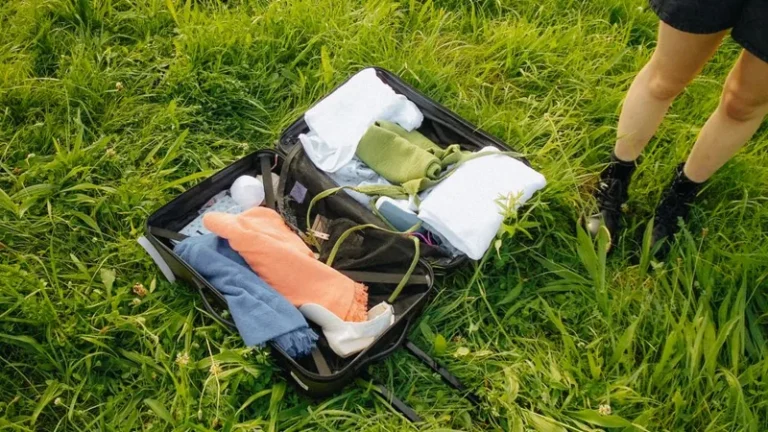
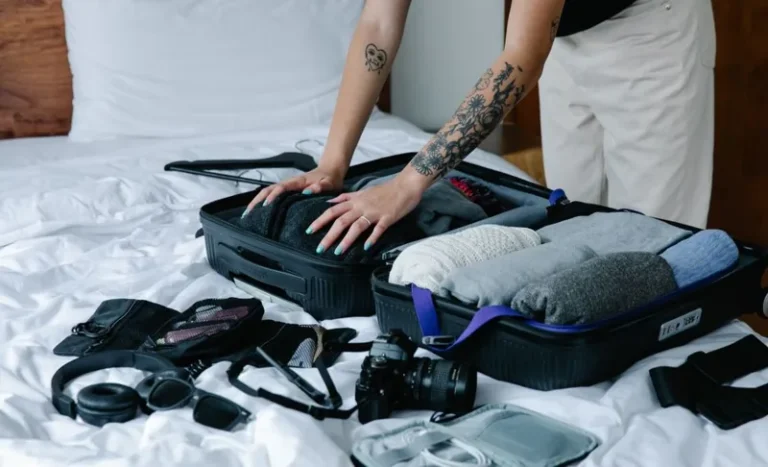
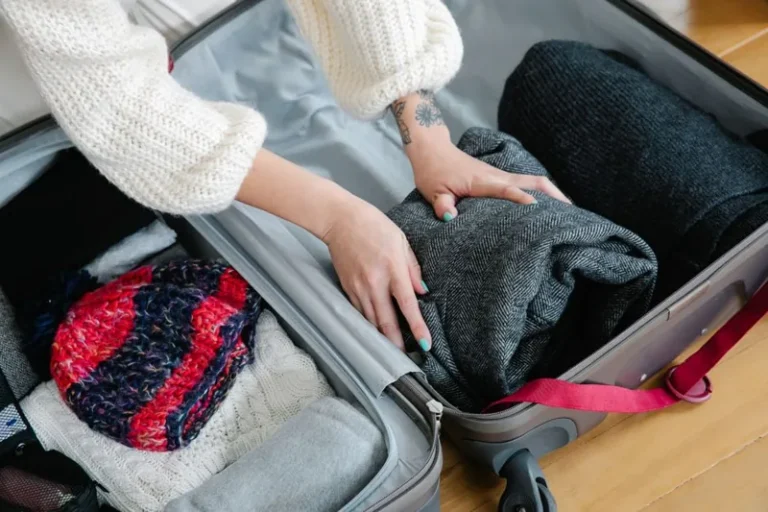
Last but not least, pack light. Trust me on this: every experienced traveler eventually converts to carry-on-only. For a first trip, aim for one carry-on and one personal item. You’ll skip baggage fees, lost-luggage risk, and sore shoulders.
Pack around a simple color palette so everything mixes and matches. Roll clothes instead of folding them. Moreover, follow a proven checklist rather than packing from memory — our complete packing list for international travel covers everything from adapters to medications.
In the final week before departure:
- Check in online 24 hours before your flight
- Screenshot all bookings (flights, hotels, tickets)
- Share your itinerary with someone at home
- Confirm airport transfer plans
- Charge your devices and download entertainment
Arrive at the airport 2.5 hours before an international flight and 1.5 hours before a domestic one. First-time flyers often cut this too close.
Common Beginner Mistakes to Avoid
Before you go, sidestep these frequent errors:
- Overplanning. Ten booked activities per day ruins a trip. Two or three anchors per day is plenty.
- Ignoring transit time. A “quick” day trip can eat four hours of travel. Always check distances honestly.
- Exchanging money at the airport. Rates are poor. Use bank ATMs instead.
- Skipping insurance. One sprained ankle abroad can cost thousands.
- Booking every single night in advance. On longer trips, book your first two or three nights, then decide your pace. Flexibility is a feature, not a risk.
FAQ: How to Plan a Trip for Beginners
How far in advance should a beginner book a trip?
Book international flights two to eight months ahead and domestic flights one to three months ahead. Accommodation can follow within a few weeks of flights. Popular tours and attractions, however, sometimes need booking months early — check availability as soon as your dates are fixed.
How much money do I need for my first trip?
A useful formula: flight cost plus (daily budget × number of days) plus a 10% buffer. For example, a $600 flight plus $100 per day for seven days, plus a buffer, equals roughly $1,370. Daily budgets range from $40 in Vietnam to $200+ in Switzerland.
Should I use a travel agent or book everything myself?
Book it yourself. For straightforward trips, direct booking through airline and hotel websites is cheaper and gives you more control. Travel agents add value mainly for complex multi-country tours, cruises, or luxury itineraries.
What documents do I need for my first international trip?
You need a valid passport (with six months’ validity for many countries), possibly a visa or e-visa, travel insurance details, and proof of onward travel for some destinations. Keep digital and paper copies of everything separately from the originals.
Is it safe to travel alone as a beginner?
Yes, in most destinations. Pick a first-timer-friendly country, stay in well-reviewed accommodation, keep valuables secure, and share your itinerary with someone at home. Millions of people travel solo each year without incident. That said, research common scams at your destination before arrival.
Final Thoughts
Planning your first trip feels complicated until you break it into steps. Choose a realistic destination, set a budget, verify your documents, book flights and stays in the right order, sketch a loose itinerary, and pack light. After that, the world opens up. Your first trip won’t be perfect — mine certainly wasn’t — but it will teach you more than any guide ever could.
Ready to take the next step? Browse our itineraries and packing guides at Journeo, and start turning that daydream into a departure board.