
Trip Planning Checklist: The Complete Step-by-Step Guide
A good trip planning checklist covers six things: documents, bookings, money, health, packing, and pre-departure tasks. When you break your trip into those buckets, nothing falls through the cracks. You book flights with confidence, pack without panic, and step out the door knowing you handled every detail.
That’s exactly what this guide does. Below, you’ll find a practical, step-by-step checklist that works for weekend city breaks and three-week international journeys alike. I’ve used versions of it everywhere from Lisbon to Kyoto, and it has saved me from expired passports, dead phone chargers, and one very memorable hotel-in-the-wrong-city incident.
Work through the sections in order. Alternatively, jump straight to the section you need right now.
Step 1: Start With Documents and Paperwork
Documents come first because they take the longest to fix. Everything else can be booked in an afternoon, but a passport cannot.
Check your passport and visas
Pull out your passport today, not the week before you fly. Many countries, including all 27 Schengen nations, require your passport to be valid for at least three months beyond your departure date. Some airlines enforce this rule at check-in and will deny boarding if you fall short.
Then confirm whether you need a visa. For example, US citizens traveling to Europe can stay up to 90 days visa-free, but Europe’s ETIAS authorization will eventually add a small fee and an online form. Meanwhile, destinations like Vietnam offer e-visas that take three to five business days. Always verify current rules on an official government source such as Travel.State.gov.
Make digital and physical copies
Once your paperwork is sorted, copy everything. Photograph your passport, visa, travel insurance policy, and vaccination records, then store the images in cloud storage and email them to yourself. Also print one set. If your phone dies in a rural area, paper saves the day.
Step 2: Build Your Trip Planning Checklist Around Bookings

Bookings form the backbone of any trip. Nail them in the right order and prices stay reasonable. Book them randomly and you’ll overpay.
Book in this order
Follow this sequence:
- Flights first. Airfare is usually the biggest cost and sets your dates.
- Accommodation second. Location matters more than square footage, so pick a neighborhood before a hotel.
- Ground transport third. Trains, rental cars, and airport transfers often rise in price as availability drops.
- Activities last. Reserve only the things that sell out, such as the Anne Frank House in Amsterdam or Boracay island-hopping tours.
Timing cheat sheet
| What you book | Ideal booking window | Why it matters |
|---|---|---|
| International flights | 2–8 months ahead | Prices typically dip 2–4 months out |
| Domestic flights | 1–3 months ahead | Sweet spot for domestic fares |
| Hotels | 1–4 months ahead | Cancelable rates drop as dates near |
| Trains (Europe, Japan) | 2–3 months ahead | Advance fares save 30–50% |
| Popular attractions | 2–6 weeks ahead | Timed entry sells out fast |
Keep every confirmation in one folder, digital or physical. Additionally, screenshot each booking, since airport Wi-Fi has a habit of failing exactly when you need proof.
For destination-specific sequencing, our Japan travel itinerary explains how to time rail passes and hotel bookings around seasonal crowds.
Step 3: Sort Out Money Before You Leave
Money mistakes cost more than any other travel error. So handle currency, cards, and budgets early.
Set a realistic budget
Break your budget into fixed costs (flights, hotels, insurance) and daily spending (food, transport, tickets). Sites like Numbeo give realistic daily costs by city — for instance, roughly $70–110 per day for a mid-range traveler in Tokyo versus $40–60 in Bangkok.
Get your cards and cash ready
First, call your bank or set a travel notice in your app so your card doesn’t get frozen abroad. Second, order some local currency from your bank; exchange counters at airports charge some of the worst rates anywhere. Third, carry at least two payment methods. I learned this the hard way in rural Portugal when a single magnetic-stripe failure left me washing dishes in my head — well, almost.
Finally, check whether your destination is cash-first. Japan and much of Southeast Asia still favor cash for small shops and restaurants, while Scandinavia has gone nearly cashless.
Step 4: Cover Health, Safety, and Insurance
This section is short, but skipping it can ruin a trip entirely.
Buy travel insurance early
Buy insurance within 14 days of your first trip payment if you want pre-existing condition waivers. Beyond medical coverage, good policies also reimburse trip cancellations, delayed baggage, and emergency evacuations. Compare plans on a reputable aggregator rather than buying whatever the airline checkout screen offers.
Handle vaccinations and prescriptions
Visit a travel clinic six to eight weeks before departure, since some vaccines require multiple doses. Moreover, ask your doctor for enough prescription medication to cover the full trip plus a week of delays, and carry it in original labeled packaging.
Register your trip
If you’re a US citizen, enroll in the Smart Traveler Enrollment Program (STEP). Embassies then know to contact you during emergencies, from natural disasters to civil unrest.
Step 5: Pack With a System, Not Vibes

Packing is where most checklists fail. People either pack everything or forget the one thing they can’t buy abroad. A system fixes both problems.
The 5-category packing method
Sort every item into one of five groups:
- Documents: passport, visa, insurance card, printed bookings, driving license
- Electronics: phone, charger, adapter, power bank, headphones
- Clothing: base layers you can mix and match, plus one outfit per climate
- Health: medications, pain relievers, motion sickness tablets, blister plasters
- Miscellaneous: reusable water bottle, daypack, lock, laundry bag
Follow the golden rules
Lay everything out first, then remove a third of it. Furthermore, check the weather for your destination one week out, and verify plug types — the UK, continental Europe, and Japan all use different sockets.
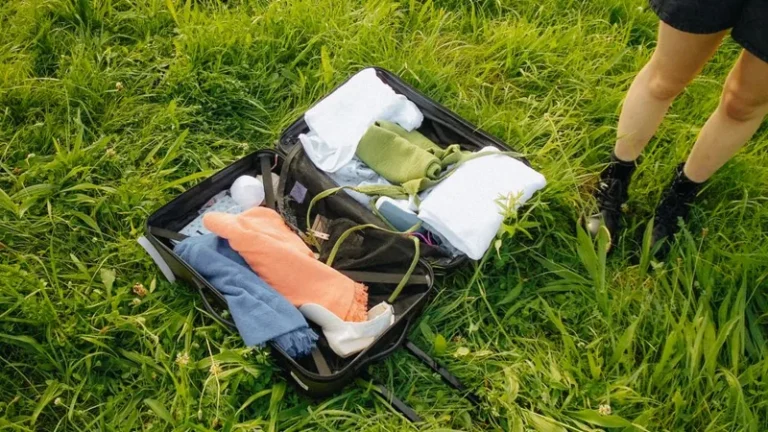
Roll clothes instead of folding them. Place heavy items near the wheels of your suitcase. And keep valuables, medications, and one change of clothes in your carry-on, because lost luggage happens.
If you want a deeper walk-through of the entire process, our beginner’s guide to trip planning covers each step with real examples.
Step 6: Your Final Pre-Departure Checklist
The last 72 hours matter most. Run through this list the day before you fly:
- [ ] Check in online and download boarding passes
- [ ] Confirm your first night’s accommodation and arrival instructions
- [ ] Charge all devices and your power bank
- [ ] Take out the trash, run the dishwasher, and lock windows
- [ ] Set an out-of-office reply and email auto-responder
- [ ] Pause mail delivery or ask a neighbor to collect it
- [ ] Pay upcoming bills or set up auto-pay
- [ ] Exchange enough cash for your first two days
- [ ] Screenshot maps and addresses for offline use
- [ ] Confirm airport transport and leave buffer time
That last point deserves emphasis. Arrive at the airport three hours before international flights and two hours before domestic ones. Missing a flight over 20 minutes of sleep is a painful trade.
Trip Planning Checklist FAQ
When should I start planning a trip?
Start planning three to six months before an international trip, or one to two months before a domestic one. That window gives you the best flight prices, wider hotel choice, and enough time to secure visas or vaccinations if needed.
What is the most important item on a trip planning checklist?
Your passport and any required visas top the list. Every other problem can be fixed on the road, but without valid entry documents, the trip simply doesn’t happen.
How much should I budget per day?
Mid-range travelers should plan $70–120 per day in Western Europe or Japan, $40–70 in Eastern Europe or Southeast Asia, and $150+ in expensive cities like Zurich or Reykjavík. Budget travelers can often halve those figures with hostels and street food.
Should I book activities in advance?
Book anything with timed entry or capped capacity ahead of time — think Sagrada Família tickets, Alhambra passes, or Dutch museum slots. Otherwise, decide on the ground where the weather and your energy levels dictate your choices.
Do I really need travel insurance?
Yes. A broken ankle in the United States or an emergency evacuation from a trekking region can cost tens of thousands of dollars without coverage. Policies typically run 4–8% of your trip cost, which is cheap peace of mind.
Wrapping Up Your Trip Planning Checklist
Great trips don’t happen by accident. They happen because someone checked the passport validity, booked flights at the right moment, budgeted honestly, packed with a system, and ran a final sweep the night before. In short, they followed a trip planning checklist like the one above.
You don’t need to do everything at once, either. Bookmark this page, work through one section per evening, and watch the stress evaporate as each box gets ticked.
Ready for the next step? Explore our two-week Europe itinerary for a ready-made route, or browse more planning guides on Journeo to turn your checklist into a concrete, bookable adventure.